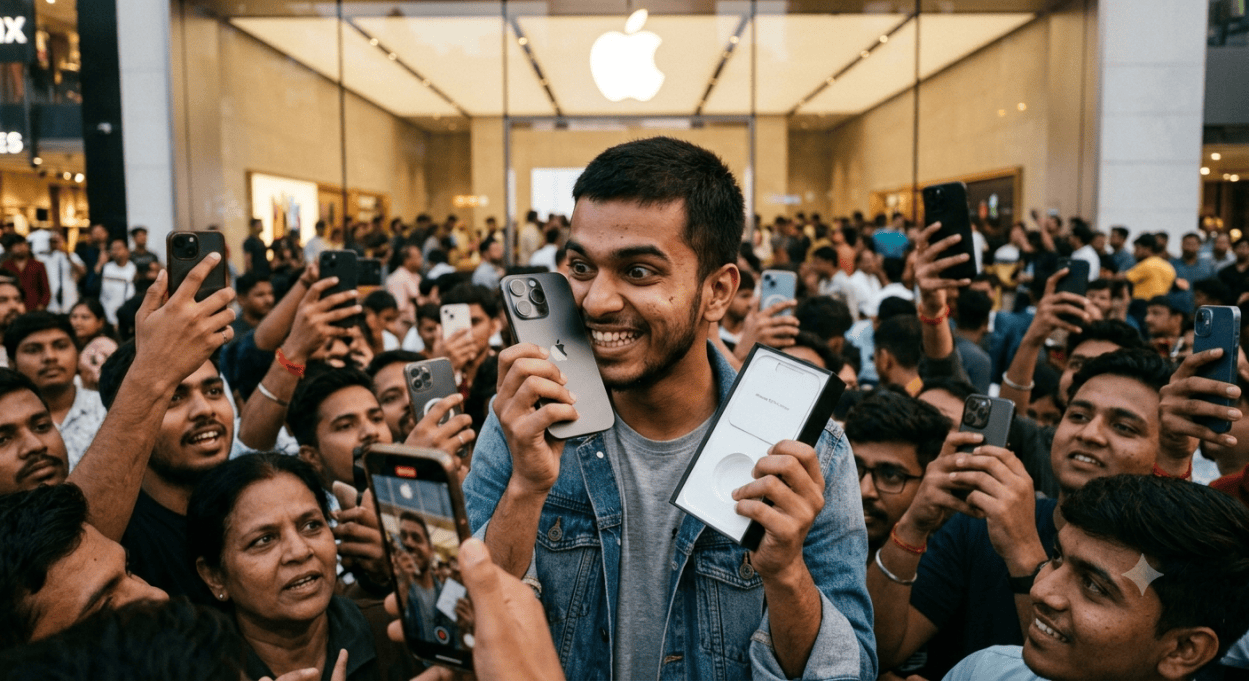
People are queuing up for hours to buy the iPhone on the first day. An iPhone purchased on the any day is as good as the one on the 1st day. Yet, why are people going through all this trouble?
Here are some of my simplistic insights on this kind of behavior.
We overcompensate
Imagine you pull a pendulum and let it go, it doesn’t just swing and stop at the center. Instead it swings past the center and far into the other direction. That is overcompensation. I learnt about this idea in Taleb’s book – Antifragile. And once I point it out to you, you will notice it’s effects everywhere.
Taleb gives the examples of Mafia bosses talking softly and the room going quiet to hear every word of the boss. The boss is very important and therefore no one wants to miss a word. The softer the voice, the more the attention. Such, a power move!
Now, let me narrate a real story of my son and his college admission saga. He got admission into 3 colleges – say A, B and C in chronological order.
- College A. Admission process was very easy to easy. No exclusivity as all friends also joined the college. Just a backup option. Hence no prestige to him. He hated everyday he had to go to college until he got admission into B.
- College B. Extremely hard to get in. Highly coveted by he and his friends and only he got in among his peers. He was super thrilled. Until …
- College C. He missed C by 1 mark! Just 1 mark! Missing C so narrowly, only made C far more desirable than B.
(By the way he opted for B.)
Imagine a man in love with a woman and say suppose she treats him badly. His love doesn’t just go away. In fact, it only increases even more and becomes an obsession. There is an arabic word that captures this obsession beautifully: junoon. That which we can’t have is what we want. And that which we get easily, we don’t care much. Like my son’s example.
Junoon is for the model in the ad we may never meet, the wealth we don’t have, the power and prestige we don’t have or the freedom we don’t have. Poems are written in blood, lives are sacrificed and wars fought … all for junoon. On the other hand no one spares a thought for the freedom we already have, the wealth we already have or college admission we already have. The one that got away holds more sway.
Croesus was among the wealthiest men of his times and Solon was a Greek legislator. When Solon visited Croesus, he tried very hard to impress Solon with his wealth and yet Solon was unmoved. What do you think Croesus did? He tried harder and harder. This pattern of impressing people we don’t like has a nice saying:
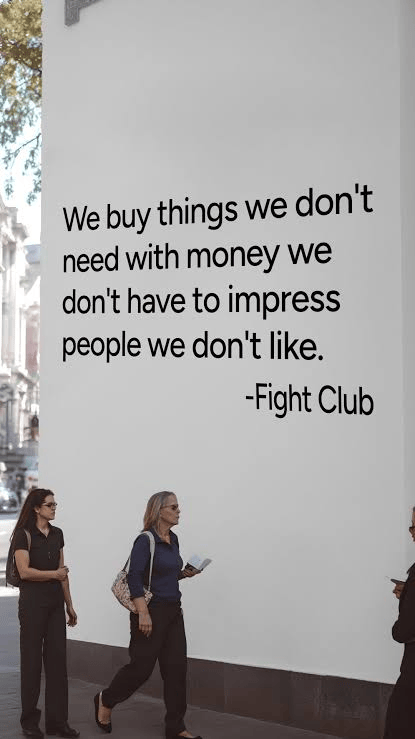
Brilliant marketers will price their product a little above the paying capacity. And when you show a beautiful product and tell people, they can’t have it … they will only want more of it. A restaurant that runs out of food or the one that closes early is the one that develops a cult status.
That, is overcompensation.
We want exclusivity
The peacock’s feather is functionally useless. It costs a lot of energy to grow it and it makes it easy for predators to spot him. So why does he still still have feathers? To show off to potential mates. Among a cohort of peacocks, the one who can carry long and heavy feathers becomes exclusive and desirable.
In nature, exclusivity is a costly and strong signal.
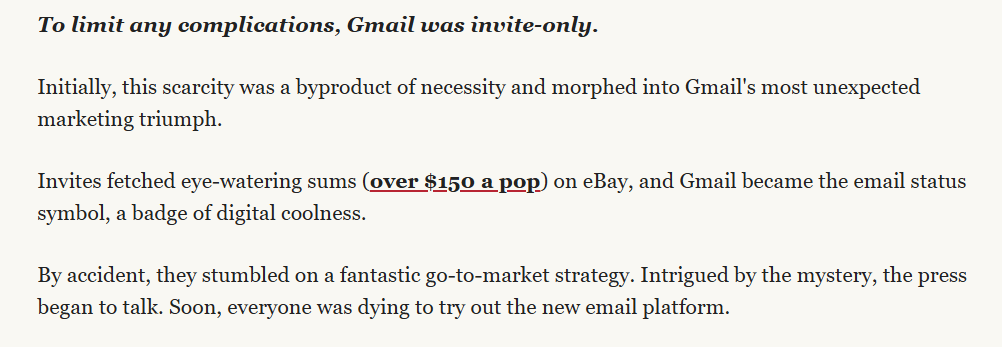
When things become rarer, we value them even more. Back in 2004, when Google launched Gmail, it was exclusive. You had to get an invite to be able to open a Gmail account! Do you think, people said – I’ll open a Yahoo account instead? No, they went out of their way to get an invitation from a friend of a friend of friend. Or buy it on eBay. Just for the coolness.
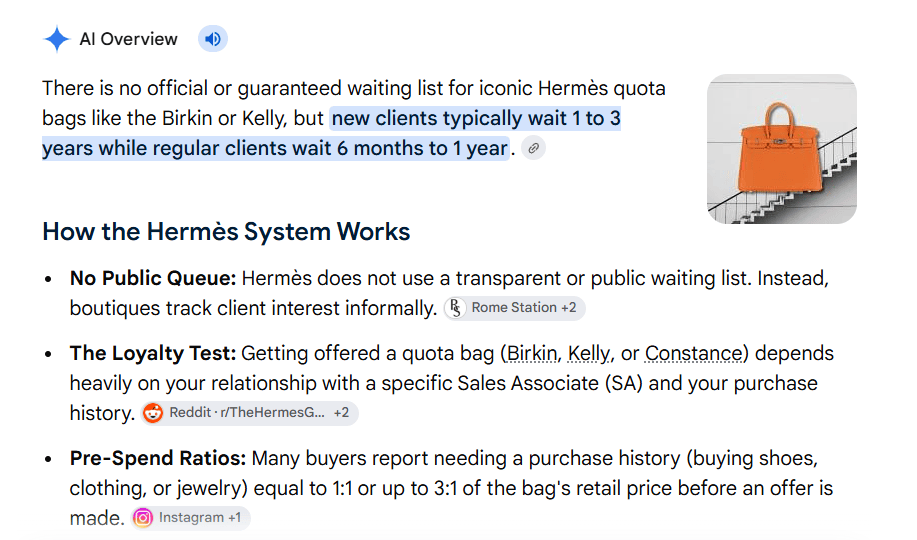
You can buy a lower end Ferrari with a lot of money. But some models are so exclusive that you can buy them only through an invitation. That makes a Ferrari even more desirable. You may be very rich, but you will have to wait for a long period to own a Hermes. Using the same principle, I once advised my Brother in Law to visit his in laws only rarely rather than regularly. But, alas…
The more things are scarce or rare, the more the prestige and more the desire to own them. Yes, scarcity leads to overcompensation.
I was once listening to a podcast and the host said that colleges like Harvard don’t want to open more branches because they want it to be exclusive. The value of that degree is in the exclusivity. More branches only dilutes the brand value.
And here is another example. Recently, I was reading When Genius Failed by Roger Lowenstein. It is about the hedge fund, Long Term Capital Management (LTCM). Lowenstein says that rich people sought exclusivity that they would casually namedrop some hedge fund that they invested in. Mutual Funds seemed so common and seemed to be fit for the general public like buses. There are other instances where LTCM refused to business with some banks and that only made those banks want LTCM even more.
People at barbecues talked of nothing but their mutual funds, but a mutual fund was so— common! For people of means, for people who summered in the Hamptons and decorated their homes with Warhols, for patrons of the arts and charity dinners, investing in a hedge fund denoted a certain status, an inclusion among Wall Street’s smartest and savviest. When the world was talking investments, what could be more thrilling than to demurely drop, at court-side, the name of a young, sophisticated hedge fund manager who, discreetly, shrewdly, and auspiciously, was handling one’s resources? Hedge funds became a symbol of the richest and the best. Paradoxically, the princely fees that hedge fund managers charged enhanced their allure, for who could get away with such gaudy fees except the exceptionally talented? Not only did hedge fund managers pocket a fat share of their investors’ profits, they greedily claimed a percentage of the assets.
When Genius Failed by Roger Lowenstein
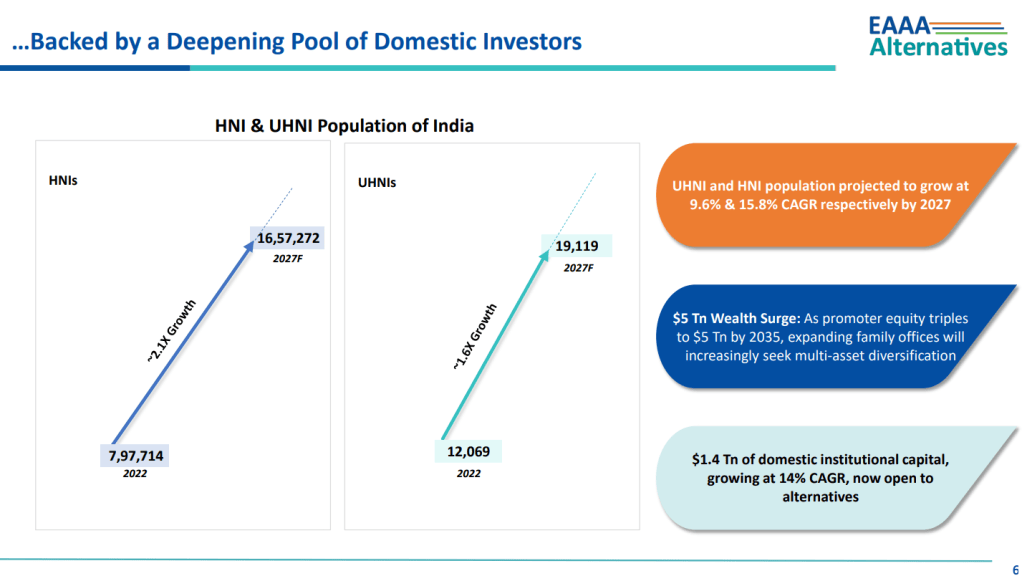
In India, the equivalent of hedge funds is AIFs. Even if you have just Rs 500 in your pocket you can invest in a Mutual Fund. But AIFs? You need a minimum of Rs 1 Cr. Mutual Funds are far more tax efficient and may even offer better returns in the long run. But AIFs signal exclusivity and even come with fancy narratives like Category I, II and III, Long Short, LP, GP and what not.
If I started an AIF, I would keep the threshold even higher. That way, people would convince themselves rather than me having to do so.
And AIFs are set grow. Know why? Because number of rich people are growing. And rich people want things and experiences that are different or exclusive. Aren’t Mutual Funds more tax efficient? Maybe, but they don’t offer exclusivity.
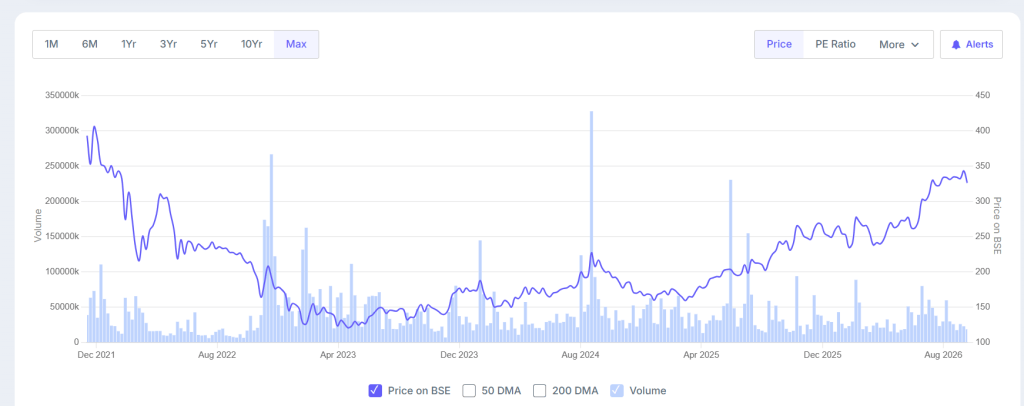
People will hope and pray for an allotment to get shares during an IPO because of the scarcity associated with it; the same shares could be available on the market later too without any takers. We yearn for what is hard to get.
Remember one fintech startup founder who went berserk because he didn’t get the funding to buy the shares he wanted? This is how that share has performed since IPO. He could buy all he wanted after IPO but no … IPO is what he wanted.
We love to signal
I once gifted an iPhone to a relative. This was at a time when iPhones were rare in India. In meetings, the first thing he would do is take out his phone and keep it face down so that everyone could see it was an iPhone. It signaled success and seniority. It was similar to the mafia boss’s power move.
There are motor bikes and then there is Royal Enfield. And then there are Royal Enfields with loud exhausts. I find them annoying but the next time I come across an annoying biker, I will picture a peacock strutting his feathers which will make me more sympathetic towards them.
If people went to prestigious institutions (also exclusive), they will not shy away from telling you about it. There will be trophies, memorabilia in their house and they will wear caps and hoodies even if they look stupid in it. They are like Croesus trying to impress you. Like Solon be unimpressed and see what they do.
—
We overcompensate. We seek exclusivity. We love to signal.
So, should we be surprised that people queue to buy an iPhone?
—
And finally … what would you do if you were the CEO of Apple?
If I were the CEO, I would launch an even more ridiculously priced phone with some quirky feature and invite some rich people to own one. That way, the quirkiness becomes more desirable. The higher price and invitation only will transform desires to junoon. I would also make sure that the stores run out of phones … :). I would sell only a limited number of the quirky model. I would drop stories in the media that phones in the black market were selling at some even more ridiculous prices. Like spurned lovers, people will only want more, not less. It will be iPhone ka junoon!
-Cheers!


One thought on “iPhone ka junoon”