
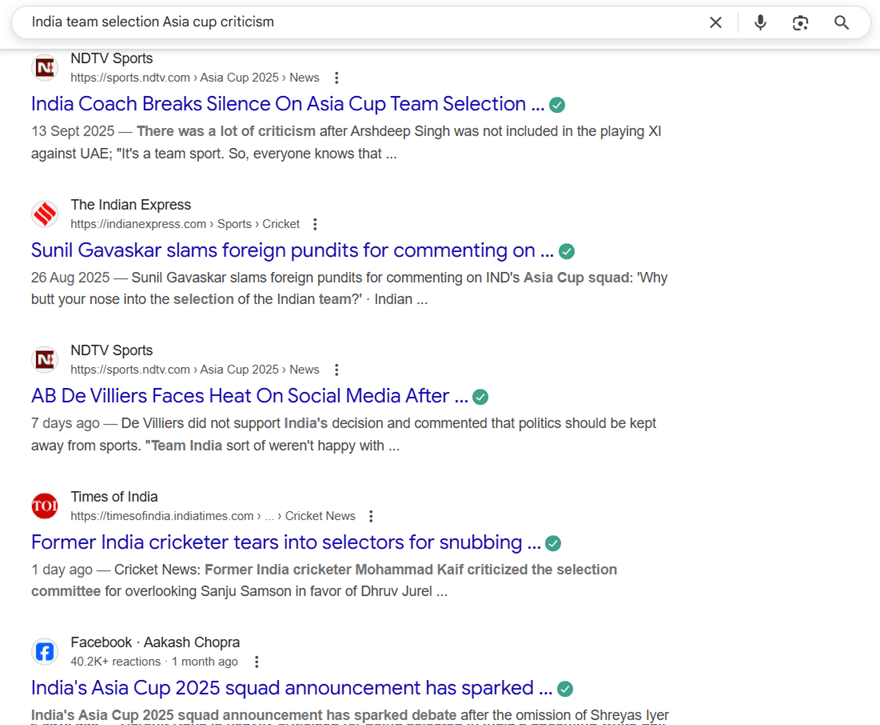
My friend PJ and I have collected 620 case studies on human folly and how we perceive things. One of the recent additions is a somewhat sensational news item: India’s team selection for the coming Australian tour. In this blog, I am trying to break down some patterns behind all the sensationalism using some ideas.
—
Idea 1: Tradeoffs
Life is all about trade offs.
It’s a Saturday morning. I could be at home watching a movie. Or reading a book. Or hiking. Or on the phone. But I enjoy writing and so I am at my office writing this blog. I can’t be in my office and be hiking at the same time. I can do only one. And therefore, all the others are sacrificed.
Similarly, you could be at a party. Or out playing. Or reading a book. But here you are – reading my 2 cents worth of blog.
Tradeoffs are a part of our life. We don’t have infinite time or money or attention. We can do one thing at a time and hence we choose one and let go off the others. These are tradeoffs.
I learnt to think this way thanks to PJ and the book he recommended: Basic Economics by Thomas Sowell. One of the key themes is the idea of Trade offs. That is: we can’t have it all. We can’t do it all. We have to make a choice, even if it is imperfect.
The book grips you from the get go. Right in the introduction he poses a thought provoking question. Say, you are a paramedic. You have been flown into a battlefield where there are a lot of wounded soldiers. You have limited time and resources available. Very quickly you realize that, no matter what you do, you can’t save them all. It depresses you, but it is reality.
What will be your strategy?
You realize that some soldiers are so badly injured that no matter what you do, they are not going to make it. And there are some, who can be saved with some medical attention. Therefore, you should resolve to save the savable and let go of the unsavable.
It is sad. It’s unfair. It is depressing to let some die through no fault of theirs or yours. But, it is a tradeoff that you have to make. If you collapse from the weight of choices you need to make or you run away – then no one will be saved. Even the few you could have saved will be lost.
Ajit Agarkar, the chairman of selectors for Indian Men’s team is like the paramedic.
When he picks a team, he has only 15 slots to fill and an infinite amount of talented players to pick from. No matter what he does, he cannot accommodate more than 15. Therefore, he will have to drop a lot of talented players, simply because he has only 15 slots. Some of those young men would have made a lot of personal sacrifices to play for India and he will have to quash many of their dreams.
Similarly, if he wants to provide more learning opportunities, should he provide those to somebody who has 10+ years left or somebody who has less than 2?
It’s not fair. But Ajit Agarkar is the paramedic here. And he can either work on saving the savable. Or try saving everybody and in the process save even fewer.
He has to make a tradeoff.
In my opinion he has done what is right for the long term good of the Indian cricket. It may not be popular. Or fair to all. But he is not here to be fair. His job is to maximize the long term interests of Indian cricket and with respect to that he has done the right thing.
Idea 2: Finite and Infinite games
The book “Finite and Infinite games” says that some games are finite like say a game of Chess or Cricket. But some games are infinite and keep going on “forever”. Think of say culture of India. It is passed on from generation to generation to generation. People will come and go, but the culture remains forever like an Infinite game.
Our hostile relations with Pakistan may continue forever; that hostility is also passed on from generation to generation. The current set of players inherited it from their ancestors and they will pass it on to their successors. The players may themselves fade away, but the hostility continues. (Hint: If we continue to play this game, the results will be the same. If we want different results, we need to change the game.)
Indian cricket is like an infinite game. There were one set of players; then another came, then another and so on. The players who will play in 2040 will be very different from the ones playing. So Indian cricket is like an infinite game which will stay “forever” whereas those playing it will keep changing.
Indian cricket lives by using resources. Players, money, cricket infrastructure (clubs, tournaments, stadiums, boards, selectors, governors) in India are all mere resources. There is only one thing that Indian Cricket cares about and that is itself.
If it needs money it will hire more players, get them to play more matches, earn money through broadcasters or conduct new tournaments. Similarly, if it wants more players, it will set up more clubs. It will pay players more and make the deals more lucrative. If it feels more stadiums are required, those will be constructed. If those stadiums need more lights, that will be added.
So you can think of Indian Cricket as an organism that is selfish. It’s only objective is: it’s own survivance and thrivance.
If you see it this way, you will realize that there is nothing wrong from Indian Cricket’s perspective to use one set of players now and another set later. There is nothing wrong from Indian Cricket’s perspective to play Pakistan when there is hostility. It doesn’t care about what I think; it cares about it’s own self. Just as every specie would think of its own interests in nature. Nothing personal.
When I was employed, my company used the Bell Curve methodology to rank peers in a set. That is, some top 10% performers would get bigger bonuses and future promotions. The majority of the peers would be in the meaty 70% bracket where the bonuses would be smaller and so would the opportunities for growth. The last 20% would be candidates for firing.
As an employee I felt this was unfair. How could they do this to us?
Now, I think it wasn’t personal. The organization, despite all the lip service, was only thinking of itself. I was just a mere resource and it was merely doing tradeoffs that were in its’ own best interests.
You too will be more forgiving of your employer, if you learn to see it as a selfish organism looking out for its’ own best interests (and not yours). And therefore, you too should do what is best for yourself and not expect anyone else to look out for you.

—
Idea 3: Kantian Fairness
Kantian fairness means that on the whole the system is fair. It does not or will not be fair to everyone. But on the whole it is good for the system.
Let’s say you worked very hard and gave it all for your organization. But because of the Bell curve (or any other fancy sounding name which in reality is just a means of trade off), you may find yourself missing out. It is not fair for you, no doubt. But that system seems to be working for the organization.
So, while individuals playing for India or working for an organization will frequently find themselves being unfairly treated, it is okay so long as it is working on the whole. That paramedic may come up with a system to save the savable and even among the savable he may not be able to save everybody. But if that system is good enough, it is akin to Kantian Fairness.
(You can read Prof. Bakshi’s blog on Kantian Fairness.)
—
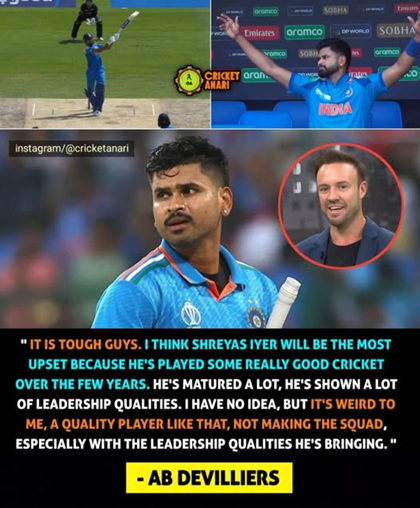
Like BCCI, like my employer, like your employer – the news channels too have only their own interest in mind. Creating sensational news (where none is required) is in their interest. Getting experts to question omissions is easy (after all somebody is going to get omitted) and in their interest. Getting experts to have a go at each other is in their interest.
Giving you a perspective on tradeoffs is not in their interest.
But if you learnt to see the world through a multidisciplinary lens like Charlie Munger, you will see recurring patterns. And learn to see most of what is reported as just BS. Don’t waste your precious time reading or watching news.

Have a nice day!
 Interest upon Interest
One thought on “Ajit Agarkar channels his inner economist”