
In the 1990s, Nobel Laureate Daniel Kahneman conducted some studies on patients undergoing colonoscopy. For the sake of the studies, the patients were divided into two groups – A and B. Do keep in mind that back in the 90s, colonoscopy was a painful procedure. During the study, the patients undergoing colonoscopy in both groups were asked to rate their pain levels every minute on a scale of 0 to 10 and these were recorded (see graph below).
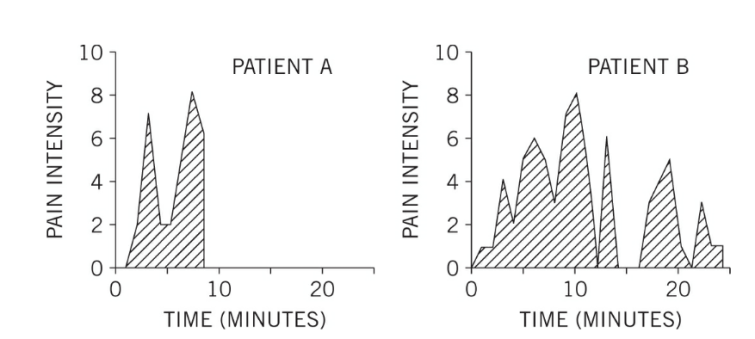
Image Source: Thinking fast and slow by Daniel Kahneman
Now, as you can see in the graph above:
- the peak pain level reported by both groups was the same: 8.
- the duration of the test was much shorter for A than for B.
- the pain level reported by group A was about 7, just before ending the procedure abruptly.
- on the other hand, the pain levels of group B were gradually brought down to 1 before ending the procedure.
From the above observations, you can definitely conclude that patients in group B had a more painful experience than group A. Not only was group B’s peak pain levels as bad as A, the duration of it’s colonoscopies were also longer. However, just after the procedure, the patients were encouraged to recall their experiences. Surprisingly, it was group A that reported having undergone far more pain than group B! What’s going on here?
Daniel Kahneman says in the book ‘Thinking Fast and Thinking Slow’:
The worst rating (8 on the 10-point scale) was the same for both patients, but the last rating before the end of the procedure was 7 for patient A and only 1 for patient B. The peak-end average was therefore 7.5 for patient A and only 4.5 for patient B. As expected, patient A retained a much worse memory of the episode than patient B. It was the bad luck of patient A that the procedure ended at a bad moment, leaving him with an unpleasant memory.
That is, just because the A’s procedure ended at a pain level 7 and B’s at 1, A had much more vivid and painful memories of their procedure than B did.
It seems like our human min, in order to optimize storage space, stores only the peak and the end of experiences and leaves out other details like the duration. So when asked to recall, we use the two cructhes of peak and end to detail our experience. But the actual experience could have been something else.
—
In the 2011 Cricket World Cup final, India was chasing 277. Gautam Gambhir scored 97 but got himself out needlessly. MS Dhoni scored 91, but stayed till the end and finished the match in style with a big 6! We all remember that shot don’t we?
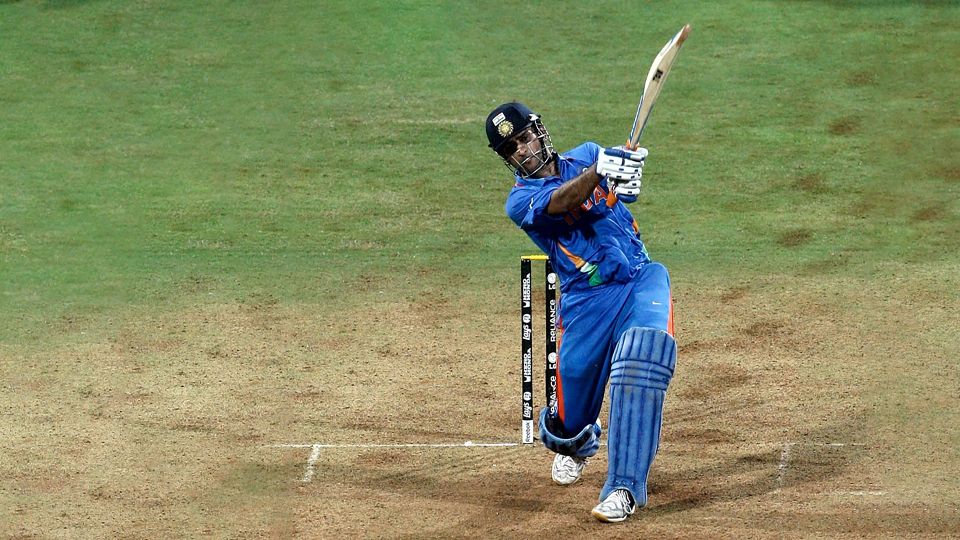
Image Source: ESPNCricinfo.com
Asked to recall the match, most of us would say how India was in trouble and the captain walked in coolly and rescued it and snatched victory from the jaws of defeat. That’s the narrative in my mind and in the minds of several people that watched that match. That is also the mind’s narrative based on the peak and the end. We remember India being in trouble and remember Dhoni finishing off in style. On a scale of 1-10 (max), the peak would be at 8 but the end would be a 100!
And Dhoni was lucky in that sense to be associated to the ending.
I can’t prove it, but I would think that the reason Dhoni is far more popular, far more remembered and far more idolized is because he has finished several matches in style, the biggest being the World Cup final. We associate him with happy endings. Would we have seen a Dhoni biopic if he had instead scored 88 but had gotten out before the finish? Would there be a MS Dhoni Global School, where your kid can become the next MS Dhoni?

Recently, we seem to have found another hero- Rishabh Pant who scored the winning runs against Australia in Brisbane. Like Dhoni, he wasn’t the top scorer but he was the finisher. And so he gets the lion’s share of the attention. A few more such finishes and he could have a biopic too. And post- retirement, he too could open a school where your grand kid, that is the child of the next MS Dhoni, can become the next Rishabh Pant.
Jerry Seinfeld understood the importance of leaving on a high and so chose to walk away from a $5 Million per episode deal for another season. By ending the show on a high, we have positive and happy remembrances. All the reruns, and syndicate money that the show is still pulling in may not have been there if there had been a disappointing season 10.
Time to leave is when people are still asking for more.
Cheers!
Featured photo by Joshua Hoehne on Unsplash
 Interest upon Interest
Very well written looking forward to reading more like this in the future
LikeLike
Thank you Aarav for your words of encouragement.
LikeLike
That is why many sportsmen want to announce retirement when they are at peak of the career… To have vivid and happy memories….
LikeLike
Yes Harish, you are correct. Yet, there are so many that don’t get it.
LikeLike
It is not just one World cup win.He captained us to two World cup wins and a Champion’s trophy win. We have a far better team now yet we haven’t won any ICC events! So there you go! Dude knows how to win when it matters.
About his retirement, I think he still has it. Lets see how the rest of the IPL goes.
LikeLike